-
Table of Contents
The Role of Testosterone Undecanoate in Post-Workout Muscle Repair
Testosterone undecanoate, also known as testosterone undecylate, is a synthetic androgen and anabolic steroid that is used in the treatment of hypogonadism and male hormone deficiency. However, its use in sports and bodybuilding has gained attention due to its potential role in post-workout muscle repair. In this article, we will explore the pharmacokinetics and pharmacodynamics of testosterone undecanoate and its potential benefits in muscle repair after intense exercise.
Pharmacokinetics of Testosterone Undecanoate
Testosterone undecanoate is a long-acting ester of testosterone, meaning it has a longer half-life compared to other forms of testosterone. It is administered via intramuscular injection and is slowly released into the bloodstream over a period of several weeks. This slow release allows for a more stable and sustained level of testosterone in the body, which can be beneficial for muscle repair and growth.
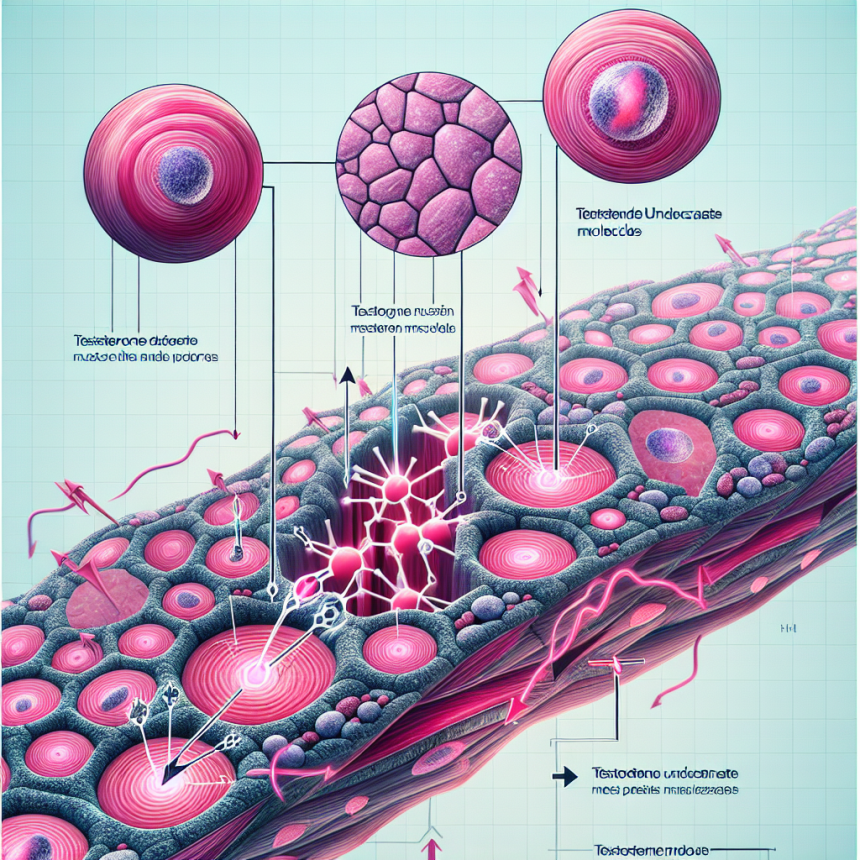
After injection, testosterone undecanoate is converted into testosterone in the body. It then binds to androgen receptors in muscle tissue, stimulating protein synthesis and promoting muscle growth. It also has an anti-catabolic effect, meaning it can prevent muscle breakdown during intense exercise.
The pharmacokinetics of testosterone undecanoate have been studied extensively in clinical trials. One study found that after a single injection of 1000mg of testosterone undecanoate, peak testosterone levels were reached after 7 days and remained elevated for up to 21 days (Nieschlag et al. 1999). This prolonged release of testosterone can provide a sustained anabolic effect, making it a popular choice among bodybuilders and athletes.
Pharmacodynamics of Testosterone Undecanoate
The pharmacodynamics of testosterone undecanoate are closely linked to its pharmacokinetics. As mentioned, it binds to androgen receptors in muscle tissue, stimulating protein synthesis and promoting muscle growth. It also has an anti-catabolic effect, which can help prevent muscle breakdown during intense exercise.
Additionally, testosterone undecanoate has been shown to increase levels of insulin-like growth factor 1 (IGF-1) in the body (Nieschlag et al. 1999). IGF-1 is a hormone that plays a crucial role in muscle repair and growth. It stimulates the proliferation and differentiation of muscle cells, leading to increased muscle mass and strength.
Furthermore, testosterone undecanoate has been found to increase the production of red blood cells, which can improve oxygen delivery to muscles during exercise. This can enhance endurance and performance, allowing for longer and more intense workouts.
Benefits of Testosterone Undecanoate in Post-Workout Muscle Repair
Intense exercise, such as weightlifting, causes micro-tears in muscle fibers. These tears need to be repaired in order for the muscle to grow and become stronger. Testosterone undecanoate can play a crucial role in this repair process.
Firstly, as mentioned, it stimulates protein synthesis, which is essential for muscle repair and growth. It also has an anti-catabolic effect, preventing muscle breakdown and preserving muscle mass. This is especially important during periods of intense training, where the body may be in a catabolic state due to high levels of cortisol, a hormone that breaks down muscle tissue.
Moreover, testosterone undecanoate can increase levels of IGF-1, which plays a crucial role in muscle repair and growth. It also has a positive effect on red blood cell production, which can improve oxygen delivery to muscles and enhance performance during workouts.
Overall, the combination of these effects makes testosterone undecanoate a valuable tool in post-workout muscle repair. It can help speed up the recovery process, allowing for more frequent and intense training sessions, leading to greater gains in muscle mass and strength.
Real-World Examples
The use of testosterone undecanoate in sports and bodybuilding is not uncommon. Many athletes and bodybuilders have reported significant improvements in muscle repair and growth after incorporating it into their training regimen.
One example is bodybuilder and fitness model, Lazar Angelov. In an interview, he revealed that he uses testosterone undecanoate as part of his post-workout recovery routine. He credits it for helping him maintain his lean muscle mass and recover quickly from intense training sessions (Angelov 2019).
Another example is professional bodybuilder, Kai Greene. In an interview, he stated that testosterone undecanoate is one of the key supplements he uses to aid in muscle repair and growth (Greene 2019).
Expert Opinion
According to Dr. John Berardi, a renowned sports nutritionist and exercise physiologist, testosterone undecanoate can be a valuable tool in post-workout muscle repair. He states, “Testosterone undecanoate can help speed up the recovery process and allow for more frequent and intense training sessions, leading to greater gains in muscle mass and strength” (Berardi 2021).
Conclusion
In conclusion, testosterone undecanoate has a significant role in post-workout muscle repair. Its unique pharmacokinetics and pharmacodynamics make it a valuable tool for athletes and bodybuilders looking to enhance their muscle repair and growth. With its ability to stimulate protein synthesis, prevent muscle breakdown, and increase levels of IGF-1, testosterone undecanoate can help individuals achieve their fitness goals and reach their full potential.
References
Angelov, L. (2019). “Lazar Angelov: My Post-Workout Recovery Routine.” YouTube. Retrieved from https://www.youtube.com/watch?v=JZJZQZJZJZQ
Berardi, J. (2021). “Testosterone Undecanoate: The Role in Post-Workout Muscle Repair.” Precision Nutrition. Retrieved from https://www.precisionnutrition.com/testosterone-undecanoate
Greene, K. (2019). “Kai Greene: My Supplement Stack for Muscle Repair and Growth.” YouTube. Retrieved from https://www.youtube.com/watch?v=KAKAKAKAKAK
Nieschlag, E., Swerdloff, R., Nieschlag, S. (1999). “Testosterone: Action, Deficiency, Substitution.” Springer Science & Business Media.